Jain Dharma, also known as Jainism, is one of the oldest religions in the world, originating in ancient India. It emphasizes non-violence, truth, self-discipline, and spiritual development through personal effort.
Ahimsa (Non-violence)
Satya (Truthfulness)
Achaurya (Non-stealing)
Brahmacharya (Celibacy)
Aparigraha (Non-possession, Non-materialism)
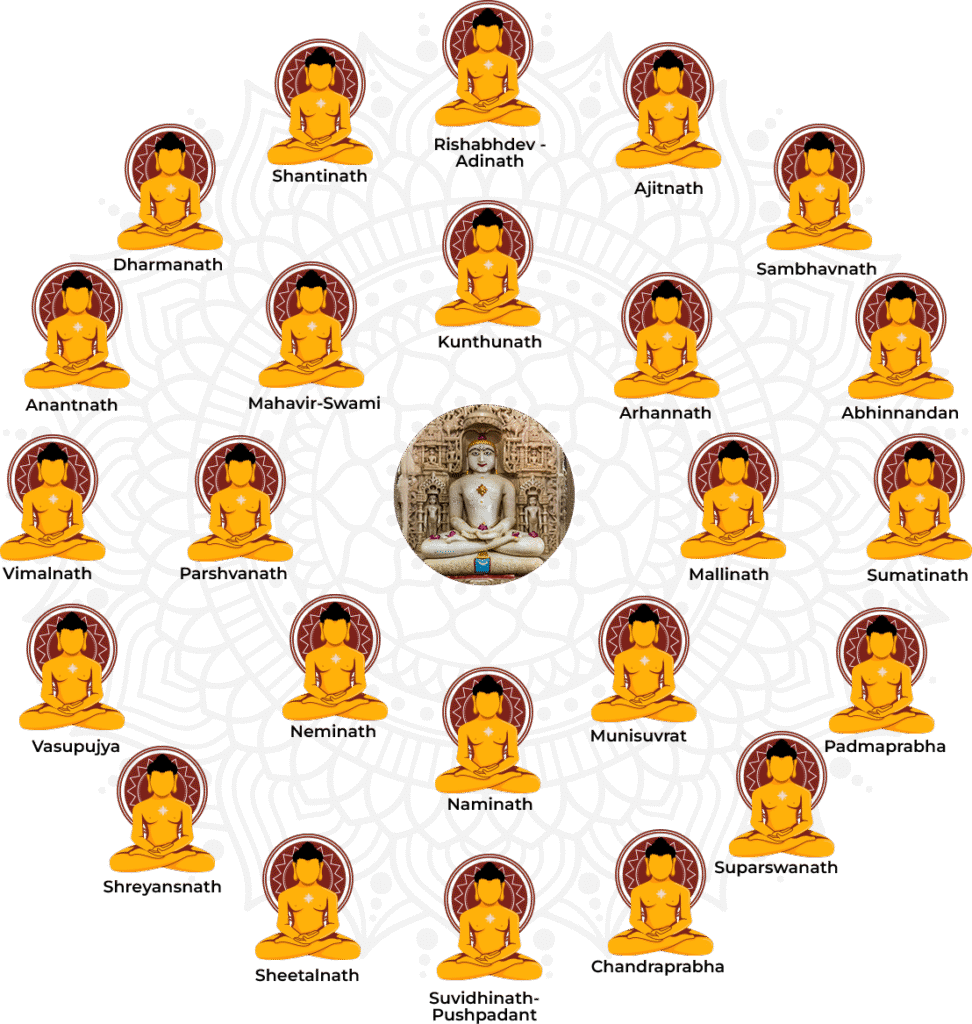
24 Tirthankaras
Jainism was established and guided through the teachings of 24 Tirthankaras over different time cycles. Tirthankaras (meaning “Ford-makers” or “Spiritual Liberators”) are enlightened beings who have attained Kevala Jnana — the state of complete omniscience. Jain dharma does not believe in god-men or creator deities; rather, Tirthankaras are extraordinary humans who achieved absolute purity and the highest Right Conduct through their own spiritual effort. They serve as supreme spiritual teachers, showing the path of liberation (moksha) and guiding all living beings toward freedom from the cycle of birth and death.
Jain Dharma teaches that the soul is eternal, ever-pure, and untouched by the noise of the world. Since ancient ages, countless seekers have walked the path of restraint and compassion, shaping their lives with the timeless guidance of the Tirthankaras. Their words, preserved through generations, continue to illuminate the inner journey, reminding us that true liberation begins with self-discipline, non-violence, and the quiet mastery of one’s own mind.
Learning
Jainism teaches a life of knowledge, discipline, and inner awakening through Ahimsa (non-violence), Satya (truth), and Aparigraha (non-possessiveness). By learning and practicing right thoughts, speech, and actions, one progresses toward purity and liberation.
Kids
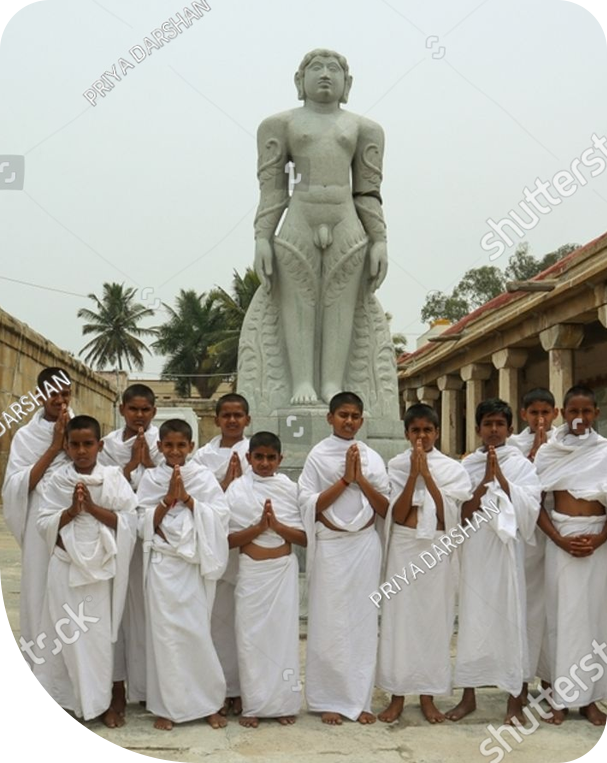
Children learn kindness, compassion, gentle speech, and respect for all beings. Stories of Tirthankaras inspire honesty, courage, and love for life.
Teens
Teens gain guidance for mindful choices, self-control, and balanced living. Principles like Ahimsa and Samyak Darshan help build confidence, clarity, and strong character.
Scholars
Scholars explore Jainism’s deep philosophy—karma, non-violence, Anekantavada, cosmology, and logic—through Agamas and classical texts, gaining insight into liberation through knowledge.
Jain temples and tirth kshetras are sacred spaces where devotees experience peace, purity, and spiritual elevation. These holy sites, established across different regions and time periods, mark the places where Tirthankaras attained keval gyan, delivered divine sermons, or performed significant austerities. Each pilgrimage destination carries centuries of devotion and serves as a reminder of the soul’s journey toward liberation.
From the towering temples of Shatrunjaya, the serene hills of Sammed Shikharji, and the ancient caves of Ellora, to the exquisitely carved shrines of Ranakpur, Dilwara, and countless other tirths — every sacred site reflects the depth of Jain art, culture, and spiritual heritage. Pilgrimages (Yatras) to these holy places inspire devotees to cultivate non-violence, forgiveness, self-discipline, and detachment from worldly desires.
Whether one visits a grand temple or a small shrine, each tirth offers an opportunity to pause, reflect, and reconnect with the eternal teachings of the Tirthankaras, guiding the soul closer to peace and liberation (moksha).
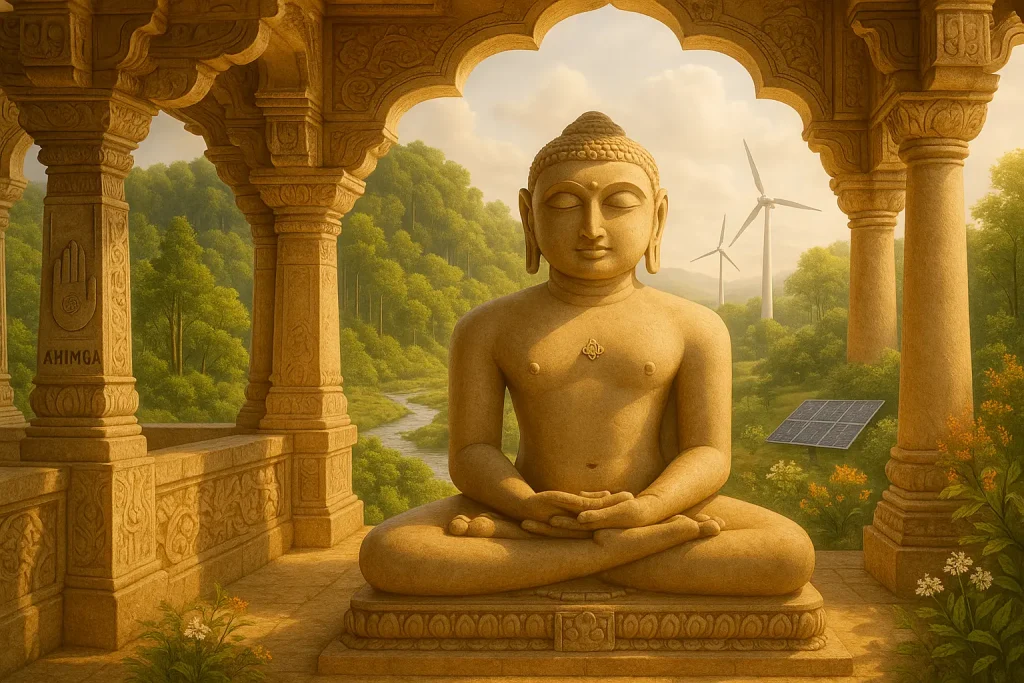
How Jain principles like Ahimsa, Aparigraha, and compassion for all living beings create one of the earliest ecological models for climate consciousness and sustainable living.