
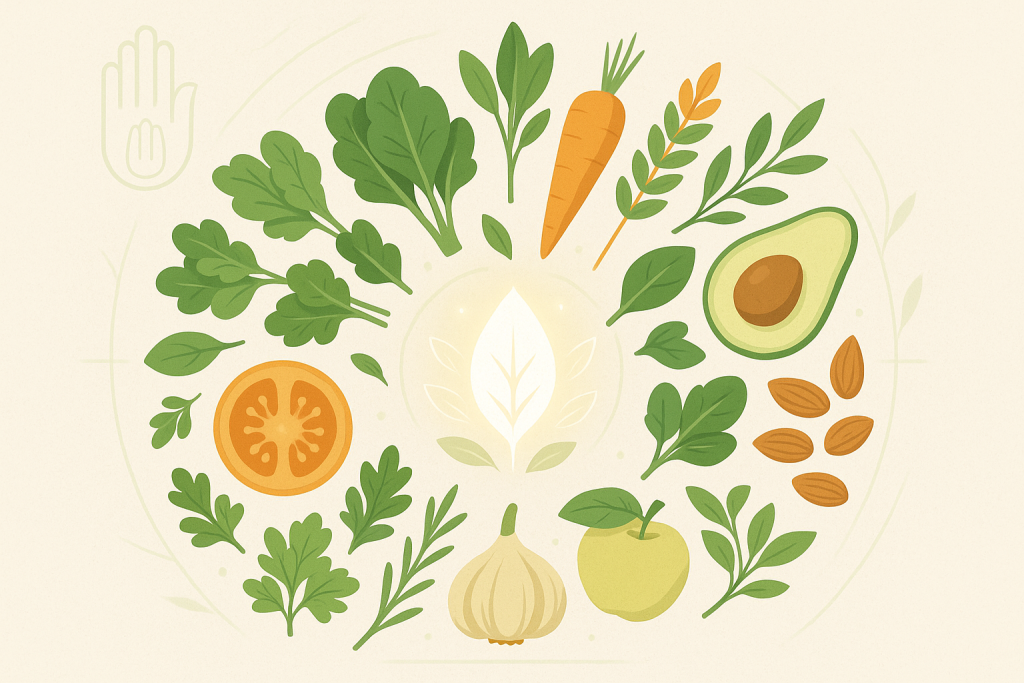
Jain Diet & Health Science (Ahar Dharma)
A Science of Conscious Eating, Compassion, and Holistic Well-Being
Jainism offers one of the world’s most sophisticated systems of ethical nutrition. Known as Ahar Dharma, it is not merely a diet—it is a complete science of conscious eating, rooted in non-violence (Ahimsa), discipline, and respect for all forms of life. In today’s wellness-driven world, the principles of Jain dietary science offer practical guidance for healthier living, mental clarity, and ecological responsibility.
1. The Philosophy Behind Ahar Dharma
At the heart of Jain dietary practices lies a profound spiritual principle:
“Food is not just consumption; it is a moral and karmic act.”
Every bite we take influences:
- Our body (physical health)
- Our mind (mental clarity and emotions)
- Our karma (spiritual progress)
- The environment (impact on living beings)
Thus, Jain diet is designed to minimize harm, promote vitality, and cultivate compassion.
2. Core Principles of Jain Diet
a. Ahimsa (Non-Violence in Food)
Jains avoid foods that involve killing or harming living beings, especially those with higher numbers of life-forms.
This includes:
- No meat, fish, eggs
- No root vegetables (potato, garlic, onion, etc.)
- No honey (considered harm to bees)
b. Satvik (Pure & Positive) Eating
Jain diet emphasizes foods that enhance peace, clarity, and balance.
Encouraged:
- Fresh vegetables
- Fruits
- Lentils & beans
- Whole grains
- Nuts & seeds
- Dairy (taken non-harmfully)
Avoided:
- Fermented foods
- Overly spicy or oily foods
- Stale or leftover food
c. Moderation — “Eat to Live, Not Live to Eat”
Overeating is discouraged, as it clouds the mind and harms the body.
Many Jains follow Sunset Eating, avoiding food after dark to prevent accidental harm to microorganisms.
3. Health Benefits of the Jain Diet
Modern nutrition research aligns remarkably with Jain dietary wisdom.
✔ 1. Better Digestive Health
A light, fiber-rich, vegetarian diet improves gut function and reduces inflammation.
✔ 2. Heart & Metabolic Wellness
Plant-based diets lower:
- Bad cholesterol (LDL)
- Risk of diabetes
- Risk of hypertension
✔ 3. Increased Energy & Mental Clarity
Satvik foods calm the nervous system and support a sharp, peaceful mind.
✔ 4. Stronger Immunity
Natural, minimally processed foods boost the body’s defense systems.
✔ 5. Longevity & Disease Prevention
Studies show plant-based diets reduce the risk of chronic illnesses—echoing Jain principles practiced for centuries.
4. Environmental & Ethical Impact
Jain diet aligns closely with modern sustainability goals.
Low Carbon Footprint
Plant-based eating significantly reduces:
- Water usage
- Land usage
- Greenhouse gas emissions
Zero Harm Philosophy
Avoiding root vegetables reduces soil disturbance and protects countless microorganisms.
Responsible Consumption
Practices like fasting and portion control reduce waste and resource exploitation.
5. Ahar Dharma in the Modern World
Even outside Jain communities, Ahar Dharma offers valuable lessons:
- Mindfulness while eating
- Reducing food waste
- Choosing plant-based alternatives
- Understanding the ethical impact of food choices
- Eating fresh, local, seasonal foods
It is a timeless approach that blends spirituality, science, and sustainability.
Conclusion
Jain Diet & Health Science is far ahead of its time.
It integrates compassion, nutrition, environmental consciousness, and spiritual growth into one powerful lifestyle philosophy.
As the world increasingly seeks healthier and more ethical ways of living, the Jain dietary tradition stands as a global model of mindful, peaceful, and sustainable eating.