
Introduction
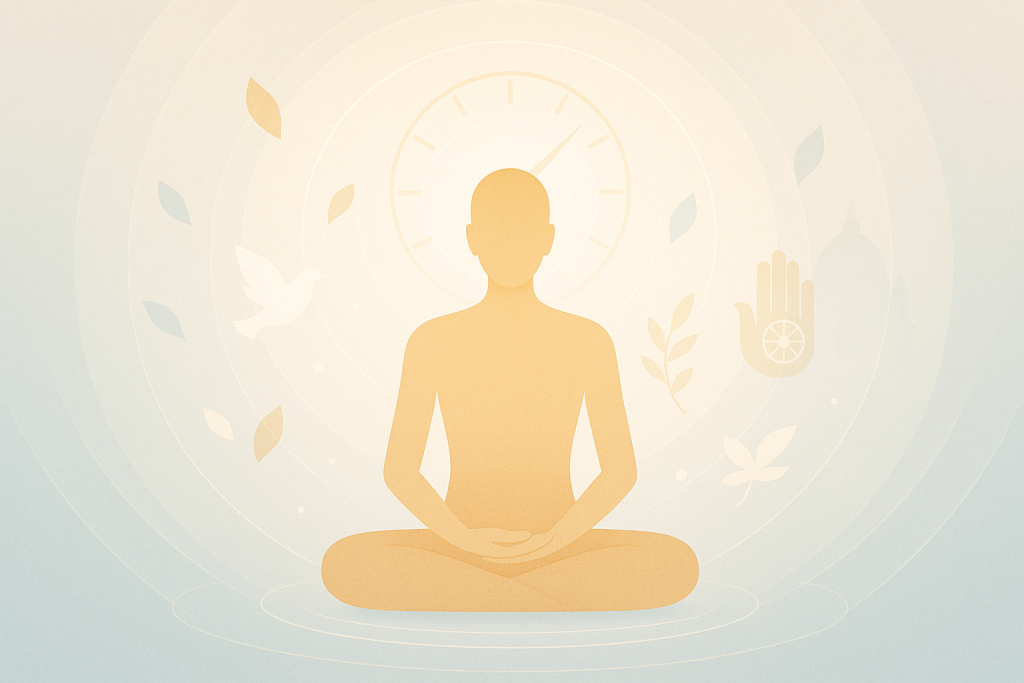
In a world filled with speed, distractions, and emotional turbulence, the Jain practices of Mindfulness, Meditation, and Samayik offer a powerful pathway to inner balance. These practices are not just spiritual rituals—they are practical tools for mental clarity, emotional healing, and ethical living. By integrating them into daily life, one can cultivate a state of equanimity (samta), reduce stress, and develop a deeper understanding of oneself and others.
1. What Is Mindfulness in Jain Philosophy?
Mindfulness in Jainism is the continuous awareness of:
- Thoughts
- Speech
- Actions
- Emotions
- Intentions
This state is known as Pramad Rahit Avastha (non-negligent awareness).
It means living consciously, avoiding harm, and acting with compassion.
Key aspects of Jain mindfulness:
- Awareness of the impact of every action
- Observing thoughts without attachment
- Practicing restraint (sanyam)
- Choosing non-violent responses
Mindfulness becomes the foundation for meditation and Samayik.
2. Understanding Meditation (Dhyana)
Meditation in Jainism is not only about peace—it is about purification of the soul.
There are four forms of meditation mentioned in Jain texts, but for modern practice, the key elements include:
✔ Focused Awareness
Concentrating on breath, mantra, or a single thought.
✔ Emotional Regulation
Letting go of anger, pride, deceit, and greed.
✔ Self-Reflection
Examining thoughts to eliminate negative tendencies.
✔ Stillness of Mind
Moving from restless thinking to calm observation.
Regular meditation helps build:
- Mental clarity
- Emotional stability
- Inner strength
- Spiritual awareness
3. What Is Samayik?
Samayik is one of the most important Jain spiritual practices.
It means entering a state of equanimity for a fixed period, usually:
- 48 minutes traditionally
- Or any meaningful, uninterrupted duration today
During Samayik, one commits to:
- Non-violence (Ahimsa)
- Non-attachment (Aparigraha)
- Pure thoughts
- Truthfulness
- Compassion
- Forgiveness
What happens during Samayik?
- Sitting still in a calming posture
- Contemplating peaceful thoughts
- Practicing breath awareness
- Reading spiritual texts
- Reciting “Pratikraman” or reflective prayers
- Observing silence and stillness
Samayik is a temporary, intense form of mindful living.
4. Benefits of Practicing Mindfulness, Meditation & Samayik
✔ Reduced Stress & Anxiety
Calms the nervous system and stabilizes emotions.
✔ Enhanced Self-Control
Promotes conscious thinking instead of impulsive reactions.
✔ Improved Focus & Clarity
Clears mental clutter and sharpens decision-making.
✔ Emotional Healing
Helps release anger, ego, jealousy, and resentment.
✔ Compassionate Living
Strengthens empathy, patience, and non-harming behavior.
✔ Spiritual Growth
Cultivates purity of mind and reduces karmic accumulation.
5. Integrating These Practices Into Daily Life
You don’t need a monastery or special setting.
Here are easy ways to bring Jain mindfulness into modern living:
🌼 1. Morning Stillness (5–10 minutes)
Start your day with slow breathing and a peaceful thought.
🌼 2. Mindful Eating
Focus on taste, texture, and gratitude—avoid multitasking.
🌼 3. Pause Practice
Before reacting, take a 3-second mindful pause.
🌼 4. Mini-Samayik
Take short periods (10–15 minutes) during the day to:
- Sit quietly
- Observe thoughts
- Practice equanimity
🌼 5. Night Reflection
Before sleeping, gently evaluate:
- Where did I act with kindness?
- Where did I lose patience?
- What can be improved tomorrow?
Conclusion
Mindfulness, Meditation, and Samayik are timeless Jain practices that fit perfectly into the modern lifestyle.
They bring:
- Peace to the mind
- Strength to the heart
- Clarity to the thoughts
- Purity to the soul
By making these practices a part of your daily routine, you nurture a deeper connection with yourself and the world—creating a life rooted in awareness, compassion, and equanimity.