
TEMPLE & PILGRIMAGE
Temple & Pilgrimage Atlas
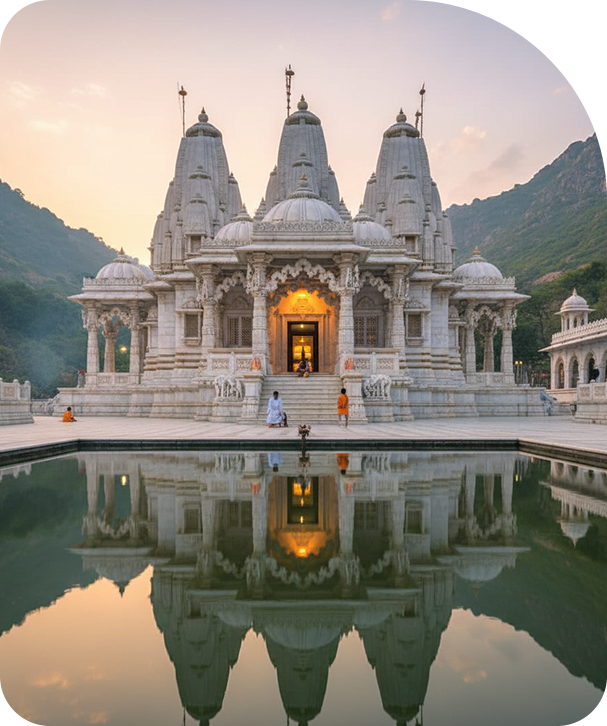
Jain temples and tirth kshetras are sacred spaces where devotees experience peace, purity, and spiritual elevation. These holy sites, established across different regions and time periods, mark the places where Tirthankaras attained keval gyan, delivered divine sermons, or performed significant austerities. Each pilgrimage destination carries centuries of devotion and serves as a reminder of the soul’s journey toward liberation.
From the towering temples of Shatrunjaya, the serene hills of Sammed Shikharji, and the ancient caves of Ellora, to the exquisitely carved shrines of Ranakpur, Dilwara, and countless other tirths — every sacred site reflects the depth of Jain art, culture, and spiritual heritage. Pilgrimages (Yatras) to these holy places inspire devotees to cultivate non-violence, forgiveness, self-discipline, and detachment from worldly desires.
Whether one visits a grand temple or a small shrine, each tirth offers an opportunity to pause, reflect, and reconnect with the eternal teachings of the Tirthankaras, guiding the soul closer to peace and liberation (moksha).
24 Tirthankaras Details & Locations
Temples / {slug): Rishabhdev
History: Rishabhanatha or Adinatha is the first of twenty-four Tirthankaras, sacred Jain souls who made vows to stay away from worldly sins and materialistic aspects of life. He is thought to have lived during the early days of human culture. He was the son of a world monarch King Nabhi and Queen Marudevi and he governed his kingdom with knowledge and kindness. He explained to people such things as farming, rearing of livestock, and barter which formed the basis of a more refined society. On completion of his responsibilities towards the royalty, he abandoned his palace life, practiced rigorous austerity, and achieved Kevala Jnana (means omniscience). They say he had been spending many of his years passing the knowledge and preaching on how to attain moksha and finally got liberated at Mount Kailash.
Temples / {slug): Ajitnath
Timings: 9.00am to 10.00pm
History: Ajitanatha the second Tirthankara was born to the royal couple, Jitashatru and Vijaya. Like Rishabhanatha, Ajitanatha was also royal and he ruled a kingdom to prosperity. His childhood taught tolerance and knowledge, as well as a well-developed sense of justice. He left his worldly life to which he was a royal prince after witnessing the reality of life and he decided to practice asceticism. He did harsh austerities and finally embraced Kevala Jnana.
Temples / {slug): Sambhavnath
Timings: 9.00am to 10.00pm
History: Ajitanatha the second Tirthankara was born to the royal couple, Jitashatru and Vijaya. Like Rishabhanatha, Ajitanatha was also royal and he ruled a kingdom to prosperity. His childhood taught tolerance and knowledge, as well as a well-developed sense of justice. He left his worldly life to which he was a royal prince after witnessing the reality of life and he decided to practice asceticism. He did harsh austerities and finally embraced Kevala Jnana.
Temples / {slug): AbhinandanSwami
History: Abhinandananatha a Jaina saint who attained salvation was born in Mithila to King Sinha and Queen Satyaki. He was modest and lowly; and gentle. He was involved in a simple life of service to his kingdom. Then he quit his throne, his materialism despairing him to seek the reality of spirituality. He then attained absorption and reached Kevala Jnana; for the rest of his life, he taught the way to attain moksha.
Temples / {slug): Sumatinath
History: The Sumatinatha was born to Megha, who was the king and Mangala, the queen of the kingdom. He was a bright child right from childhood hence was nicknamed Sumati which translates to wise intellect. He was a king extraordinaire who governed his kingdom right, if not left, which saw many of his people living affluent lives. Finally, he heard the call of higher knowledge and became a sage, which means that he left the world. He became all-knowing after performing long austerities.
Temples / {slug): Padmaprabha
History: Padmaprabha was born as a prince to King Shridhar and Queen Susima. He was named after the lotus since he had a beautiful fair complexion. A responsible and sympathetic monarch who spent all the time of his reign thinking about his subjects. But he quickly came to understand that material success was transient, so after giving up his throne he wanted to put an end to ignorance and gain release. He gets his Kevala Jnana after deep concentration.
Temples / {slug): Suparshvanath
Timings: 9.00am to 10.00pm
History: Suparshvanatha was the son of a king Pratistha and a queen Prithvi. This kid had so much wisdom and compassion for every one from the moment that he was born. He was kind, fair and a wise king who still the way of his predecessors relinquished his throne for the purpose or a spiritual life. Suparshvanatha got liberated after numerous years of practicing meditation, and austerity.
Temples / {slug): Chandraprabha
History: Chandraprabha, the first-born child of King Mahasena and Queen Lakshmana was born in Sri Lanka. He was known to be quiet, calm and collected and he exercised his power fairly and benignly. He got more and more dissatisfied with the ephemeral nature of the rewards this world offers and took up the life of a hermit. Kevala Jnana was gained by him after intense meditation or the practice of deep penance.
Temples / {slug): Suvidhinath
Timings: 9.00am to 10.00pm
History: Suvidhinatha was born from King Sugriva and Queen Rama. From what is on record, he was blessed with a fantastic brain and superb skills. He lived fairly for many years as a king exercising justice and fairly ruling the kingdoms, upon which the desire for worldly things diminished and he abandoned the secular. By very strict self rule, Suvidhinatha became omniscient.
Temples / {slug): Shitalnath
History: Shitalanatha was the son of King Dridharatha and Queen Nanda. He was a great ruler who was fair and kind, as all Tirthankaras were, but like all other Tirthankaras, he saw the impermanence of the world. He gave up his throne and sought salvation through austerity and yoga ultimately attaining the state of Kevala Jnana.
Temples / {slug): Shreyansanath
Timings: 9.00am to 10.00pm
History: Shreyansanatha was born in Simhapuri city to parents who were King Vishnu and Queen Vishnu Devi. Even as a boy, he was endowed with good hearts, which characterized his reign as a king, and a wise one. Finally, he abdicated and turned into a hermit. Shreyansanatha had been so proficient in his penance that he eventually rose to omniscience.
Temples / {slug): Vasupujya
Timings: 9.00am to 10.00pm
History: Vasupujya was born in the city of Champapuri from parents King Vasupujya and Queen Jaya. A hero and a benevolent king, who defended his people and protected them from misfortune and troubles which troubled the rest of the country. These experiences have beel narrated to portray King Bharat as a successful monarch, but he had requisite spiritual life, so left the kingdom in the search of realization. Through years of penitentiary, Vasupujya got Kevala Jnana.
Temples / {slug): Vimalnath
Timings: 9.00am to 10.00pm
History: Vimalanatha was born to King Kratavarma and Queen Shyamadevi in Kampilya and was a descendent from sage Vishwamitra. When he acted as a king, he was always fair and had the clear conscience of most righteous men. But as the so-called Ellis understood that there is no eternity in the spirit of wealth, he abdicated from the throne and became an ascetic. After years of his penance he became omniscient.
Temples / {slug): Anantnath
Timings: 9.00am to 10.00pm
History: Anantanatha as a son of King Sinhasena and Queen Suyasha in the city of Ayodhya. He is best remembered for his wisdom and while he may have had little compassion this is considered to be one of the best deeds he ever performed since it was during his reign that this practice was effectively started. Later, understanding that everything coming into existence is temporary, he left the throne, and began to practice for the spiritual liberation of his soul. Thus, using meditation, Anantanatha arrived at the status of Kevala Jnana.
Temples / {slug): Dharmanath
Timings: 9.00am to 10.00pm
History: Fifteen Tirthankaras of the Jain tradition Dharmanatha was born in Kausambi in the house of a king Bhanu and his queen Suvrata. He was a righteous and just king, who was admired by the people to have justice and favour in his heart. Understanding the ephemeral nature of royal power and fame, Dharmanatha left his royal palace and Kingdom to follow a life of extreme Tapas. He set himself completely on the practices of meditation and spiritualism. Once he was thus dedicated to it, for the many years necessary, he became Kevala Jnana, the supreme omniscience.
Temples / {slug): Shantinath
Timings: 9.00am to 10.00pm
History: Shantinatha took birth in Shikharagiri from King Vishvasena and Queen Achira. He was famous for his calmness and understanding, thus governing the people with an emphasis on non-violent conflict resolution. Thus someday he realized the vanity of life, both in itself and in material possessions and he left his kingdom to become a hermit monk. Due to rigorous practice of meditation and self-control, he became a Jina, he achieved Kevala Jnana.
Temples / {slug): Kunthunath
Timings: 9.00am to 10.00pm
History: Kunthunatha was born in Champa from the royal couple posing King Shursena and Queen Shridevi. He admired him for his intelligence as well as for his moral principle. After reigning justly, Kunthunatha decided to embrace an ascetic form of life, abdicate his kingship in order to follow the path of search for Truth. He performed severe austerity, he obtained Kevala Jnana – he who knows everything without any external help.
Temples / {slug): Aranath
Timings: 9.00am to 10.00pm
History: Aranatha was born to king Sudarshana and queen Devi at Ahalyapur. He was a king of justice and mercy. But, owing somewhat to the falsity of the world which he saw in this light and recognised as such after the glamour had passed from him, he gave up his kingdom and became a hermit. He is the person who gained deep and proper spirituality by practicing meditation.
Temples / {slug): Mallinath
Timings: 9.00am to 10.00pm
History: Mallinatha is special among the Tirthankaras because Mallinatha is the only female among all Tirthankaras. Mallinatha was daughter of King Kumbha and Queen Prabhavati born in Vallabhipur; Beautiful and intelligent. When she successfully finished her reign she gave up royalty and decided to become a spiritual woman. She successfully practiced austerities which brought her to the state of Kevala Jnana.
Temples / {slug): Munisuvratnath
Timings: 9.00am to 10.00pm
History: Munisuvrata was said to have been born to King Sumitra and Queen Padmavati in Pundarik. He was an introspective and very astute man. Having achieved much in political career and becoming a wise, just and compassionate monarch he abdicated to become a seeking Yogi. And by strict practice of meditation he became liberated from ignorance and aversion, and attained perfect knowledge.
Temples / {slug): Naminath
Timings: 9.00am to 10.00pm
History: Naminatha was born in Rajagriha to the king Vijay Chakravathi and Queen Vapra Devi. Kind and wise man who became famous as Muarajah born in Qatar successfully governed his state only with kindness. He gave up power and kingdom when he came to understand that even it is temporary here in this material world. After deep concentration he received Kevala Jnana.
Temples / {slug): Neminath
Timings: 9.00am to 10.00pm
History: Neminatha born to King Samudravijaya and Queen Shivadevi in Dwarka city. He was a man of justice and charity by nature stressing justice and welfare throughout his reign in the kingdom. Summum bonum being the realization of the materialistic glory, being devoid of permanency he退出 the world in the search for spiritual emancipation. By austerities and spiritual practices, he gained full and direct realisation at last and became a Kevala Jnani.
Temples / {slug): Parshvanath
Timings: 9.00am to 10.00pm
History: Parshvanatha’s birth as Parshva was to King Ashvasena and Queen Vamadevi at Varanasi. He was rightous minded king; his kingdom was dominated by non-violence and truth. Understanding illusory nature of the beautiful things of the world he abdicated the Kingdom and indulged in austerities. As with every other Jaina Saint, years of meditation led Parshavanatha to gain Kevala Jnana.
Temples / {slug): MahavirSwami
Timings: 9.00am to 10.00pm
History: Mahavira, originally known as Vardhamana is the last and by far the most famous Tirthankara in Jainism. He was born around 599 BCE in the city of Vaishali kingdom, to its king Siddhartha and Queen Trishala. From childhood Mahavira had profound religious perception and great sensitivity. He gave up his royal lifestyle after the death of his parents at the age of 30, to seek a spiritual path. He followed rigorous tapasya or penance and meditation for twelve years and then got the state of Kevala Jnana which makes the individual all knowing. After attaining his enlightenment Mahavira was totally involved in the preaching the tenets of Jainism and setting up a major Jain order of monks and Nun.

“Lord Mahavir taught that the soul is its own master and liberation is achieved through right knowledge, right faith, and right conduct. True peace arises when we conquer our inner enemies—anger, pride, deceit, and greed—and live with compassion, non-violence, and purity of thought. The path to freedom begins within.”